


When people talk about staying healthy, they usually think about exercise, diet, and sleep. But there’s another part of your body that deserves just as much attention—your brain.
Your brain is constantly working: remembering information, solving problems, focusing on tasks, and processing emotions. Just like muscles in your body, the brain performs better when it is used regularly and challenged in new ways.
Research in psychology and neuroscience suggests that certain activities can help strengthen memory, sharpen focus, and keep the brain active as we age. Many experts recommend practicing Exercises to Improve Memory regularly because they stimulate different areas of the brain and encourage stronger connections between brain cells.
The good news? Many Exercises to Improve Memory are simple activities you can easily include in your daily routine.
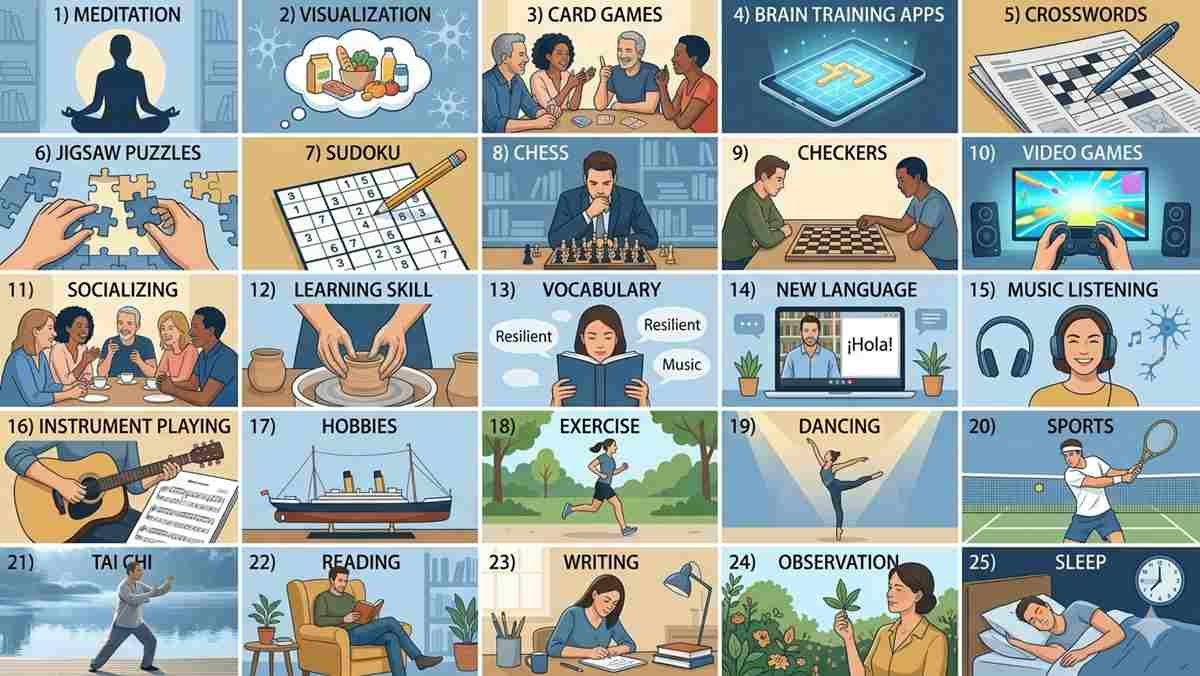
Here are 25 science-supported exercises that may help improve memory, concentration, and overall cognitive health.
1. Practice Meditation


Meditation trains the mind to focus. Even a few minutes of quiet breathing can help improve attention and mental clarity. Among the many Exercises to Improve Memory, meditation is often recommended because it strengthens concentration and reduces mental stress.
2. Use Visualization

Visualization means creating mental pictures to remember information. For example, if you need to remember a grocery list, imagine each item clearly in your mind.
Visualization is one of the simplest Exercises to Improve Memory because it helps the brain store information through imagery and association.
3. Play Card or Board Games

Games like cards, board games, or strategy games challenge the brain to think ahead, recognize patterns, and make decisions quickly. These activities are often listed among fun Exercises to Improve Memory because they combine entertainment with cognitive stimulation.
4. Try Brain Training Games

Digital brain-training apps often include memory tests, pattern recognition tasks, and problem-solving challenges that can stimulate mental activity. Many researchers consider these games effective Exercises to Improve Memory, especially when played regularly.
5. Solve Crossword Puzzles

Crosswords encourage you to recall vocabulary and general knowledge. They also help strengthen language skills and memory recall, making them one of the classic Exercises to Improve Memory used by people of all ages.
6. Build Jigsaw Puzzles

Jigsaw puzzles engage several cognitive abilities at once, including visual perception, spatial reasoning, and working memory.
7. Play Number Puzzles
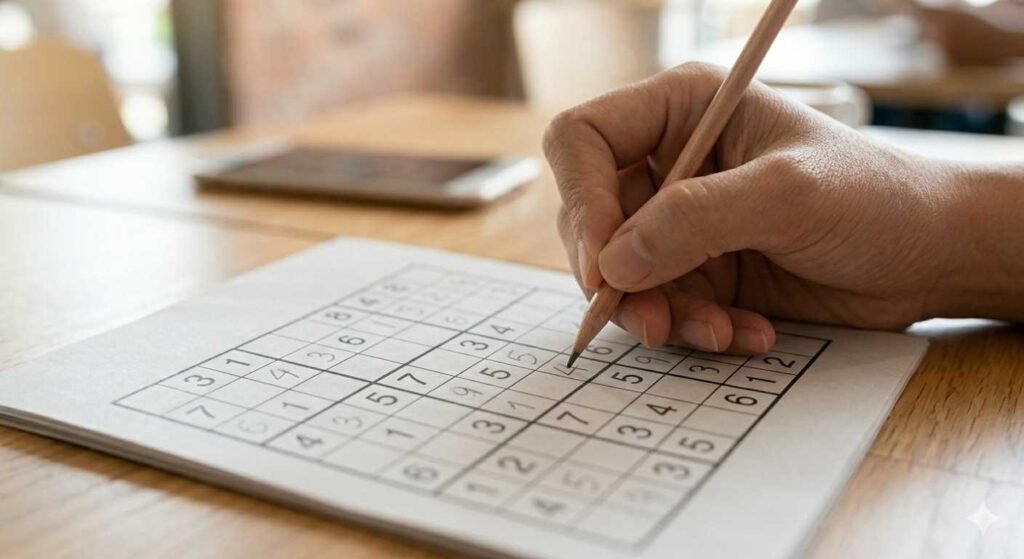
Sudoku and other number puzzles challenge logic and concentration. They require the brain to hold information in memory while solving problems step by step.
8. Learn Chess
Chess is one of the most mentally demanding games. It requires planning, memory, pattern recognition, and strategic thinking.
9. Play Checkers
Even simpler strategy games like checkers can stimulate the brain by encouraging planning and decision-making.
10. Play Video Games in Moderation
Some research suggests that certain video games may improve reaction time, attention, and problem-solving skills.
11. Socialize with Friends

Spending time with friends and family keeps the brain active. Conversations, laughter, and shared activities challenge the brain in ways that solitary activities cannot.
Interestingly, social interaction is often overlooked but can be one of the most natural Exercises to Improve Memory.
12. Learn a New Skill

Trying something new—like photography, cooking, or crafting—pushes the brain to form new neural connections.
Learning new abilities is considered one of the most effective Exercises to Improve Memory because it forces the brain to adapt and grow.
13. Expand Your Vocabulary

Learning new words strengthens language centers in the brain. Reading books and looking up unfamiliar words can gradually build a stronger vocabulary.
14. Learn a New Language
Speaking more than one language engages multiple areas of the brain and may help improve memory and cognitive flexibility.
15. Listen to Music
Listening to music you enjoy activates several parts of the brain, including those responsible for emotion, memory, and creativity.
16. Learn a Musical Instrument

Playing an instrument requires coordination, timing, and memory. This combination can provide a powerful mental workout.
17. Develop Engaging Hobbies
Hobbies such as painting, knitting, writing, or photography stimulate creativity and encourage deep focus.
Creative hobbies are also excellent Exercises to Improve Memory because they require concentration and imagination.
18. Exercise Regularly

Physical activity increases blood flow to the brain. Activities like walking, cycling, or swimming can support brain health and cognitive performance.
Many scientists believe that physical movement should be included in daily Exercises to Improve Memory routines.
19. Try Dancing
Dancing combines movement, rhythm, and memory as you learn and repeat steps. It challenges both the body and the mind.
20. Participate in Sports

Sports that require strategy, teamwork, and quick reactions can strengthen focus and decision-making skills.
21. Practice Tai Chi
Tai chi combines slow movements, breathing, and mindfulness. Many studies suggest it may support memory and mental balance.
22. Read Regularly
Reading stimulates imagination and comprehension while strengthening focus and language skills.
23. Write Things Down
Journaling or note-taking can improve memory by helping the brain process and organize information.
24. Practice Mindful Observation

Take a few minutes to observe your surroundings carefully—colors, sounds, textures. This trains attention and awareness.
25. Get Enough Sleep

Sleep is essential for memory consolidation. During sleep, the brain processes and stores information learned during the day. Most adults need around 7–9 hours of sleep each night.
Sleep may not seem like an activity, but it supports all Exercises to Improve Memory by allowing the brain to recover and store information effectively.
The Bottom Line
Improving memory doesn’t require complicated tools or expensive programs. In many cases, it comes down to staying mentally active, learning new things, and maintaining healthy daily habits.
Simple habits such as puzzles, social interaction, exercise, and creative hobbies can all work as Exercises to Improve Memory that keep the brain sharp and active.
The key is consistency. Try different Exercises to Improve Memory and stick with the ones you enjoy most. When brain exercises feel fun rather than like a chore, you’re far more likely to continue them—and your brain will benefit from the regular workout.
Read Also:
https://thebrainalert.com/brain-training-exercises-daily-activities/