

The recent Cyclospora outbreak in Southeast Michigan has left many people uneasy. In just one week, health officials reported more than 300 cases of cyclosporiasis across several counties, and the investigation is still ongoing. For a state that usually sees only about 50 cases a year, that kind of jump naturally gets people talking—and worrying.
When news of an outbreak spreads quickly, it can do more than raise public health concerns. It can also trigger anxiety, constant symptom-checking, and a flood of worst-case thoughts. One minute you’re reading about contaminated produce, and the next you’re wondering whether every stomach cramp means something serious.
The good news is that cyclosporiasis is treatable, and understanding the facts can help calm a lot of unnecessary fear. In this article, we’ll break down what cyclosporiasis is, how it spreads, what symptoms to watch for, how it is treated, and the three mistakes that can make an outbreak feel even more overwhelming.
Key Takeaways
- Cyclosporiasis is a treatable intestinal infection caused by the parasite Cyclospora cayetanensis.
- It usually spreads through contaminated food or water, not from casual person-to-person contact.
- Common symptoms include watery diarrhea, stomach cramps, nausea, fatigue, and loss of appetite.
- The infection can last for weeks if untreated, so medical evaluation matters.
- The standard treatment is trimethoprim-sulfamethoxazole (TMP-SMX), prescribed by a healthcare provider.
- During an outbreak, avoid self-diagnosing every stomach issue, doomscrolling, and ignoring food safety basics.
- Protecting your mental health is just as important as protecting your physical health.
Why Disease Outbreaks Can Affect Your Mental Health
When health officials announce an outbreak, your brain immediately starts scanning for danger.
You may find yourself asking:
- Did I eat something contaminated?
- Am I already infected?
- Could my family get sick too?
- What if the symptoms don’t go away?
That reaction is completely normal. Human beings are wired to notice threats quickly, even before we know whether we are personally at risk.
The problem is that social media and nonstop news updates can make that fear grow fast. One alarming post can spread much faster than a clear, accurate explanation. If you keep reading frightening updates all day, it can lead to:
- Increased anxiety
- Trouble sleeping
- Difficulty concentrating
- Health-related panic
- Repeated symptom checking
The goal is not to ignore the outbreak. The goal is to stay informed without letting fear take over.
Table of Contents
ToggleWhat is cyclosporiasis?
Cyclosporiasis is an intestinal infection caused by a microscopic parasite called Cyclospora cayetanensis.
This parasite infects the small intestine and can cause digestive symptoms that may last for days or even weeks if not treated.
Unlike viruses that spread easily from one person to another, Cyclospora usually enters the body through contaminated food or water.
Doctors diagnose the infection by testing a stool sample, since symptoms alone are not enough to confirm it.
Cyclosporiasis outbreak: Why Michigan Health Officials Are Concerned
Health officials in Michigan recently reported a sharp rise in confirmed cases.
The outbreak has affected several counties, including:
- Monroe
- Lenawee
- Washtenaw
- Wayne
- Livingston
- Jackson
- Shiawassee
Additional cases have also been reported in Detroit and other nearby counties.
The people diagnosed range in age from 8 to 84 years, which shows that the infection can affect both children and adults.
Investigators are still working to identify the common food source behind the outbreak.
Although outbreaks like this can sound alarming, they are usually tied to a specific contaminated food item rather than widespread community spread.
Cyclosporiasis pronounce
Many people are unsure how to say the word correctly.
Cyclosporiasis is pronounced:
SIGH-klo-spor-EYE-uh-sis
The parasite itself, Cyclospora cayetanensis, is pronounced:
SIGH-klo-SPOR-uh kai-uh-tuh-NEN-sis
Knowing how to pronounce the condition may seem like a small detail, but it often makes the illness feel a little less unfamiliar and intimidating.
What is the cause of Cyclospora infection?
Cyclospora infection happens when a person swallows food or water contaminated with the parasite Cyclospora cayetanensis.
It is often linked to:
- Fresh cilantro
- Basil
- Lettuce
- Salad mixes
- Raspberries
- Snow peas
- Fresh herbs
- Contaminated drinking water
Unlike some other germs, Cyclospora must mature outside the human body before it can infect someone.
That is one reason direct person-to-person spread is considered unlikely.
How is cyclosporiasis transmitted
People become infected after eating or drinking something contaminated with microscopic Cyclospora parasites.
Public health experts explain that:
- The parasite leaves the body through stool.
- It needs one to two weeks outside the body before it becomes infectious.
- Another person gets infected only after swallowing contaminated food or water.
Because of this life cycle, family members usually do not spread it to each other the way stomach viruses often do.
Cyclosporiasis life cycle
Understanding the parasite’s life cycle helps explain why outbreaks are often tied to produce.
Here is how it works:
- An infected person passes Cyclospora in stool.
- The parasite matures in the environment for one to two weeks.
- Contaminated water or soil transfers the parasite onto fresh produce.
- A person eats the contaminated food.
- The parasite reaches the small intestine and begins multiplying.
- New parasites leave the body through bowel movements, continuing the cycle.
Because many fruits and vegetables are eaten raw, they can carry the parasite if they are contaminated before reaching consumers.
Cyclosporiasis incubation period
The Cyclosporiasis incubation period is usually about one week.
Symptoms may appear anywhere from:
- 2 days
- 14 days
- Sometimes even longer
That delay can make it hard to remember exactly which food caused the infection.
Cyclosporiasis symptoms
Not everyone develops symptoms right away, but when illness does appear, common signs include:
- Watery diarrhea
- Frequent bowel movements
- Explosive diarrhea
- Stomach cramps
- Loss of appetite
- Nausea
- Fatigue
- Bloating
- Gas
- Weight loss
- Mild fever
Many people say the fatigue is one of the hardest symptoms because it can linger long after the stomach problems begin.
Without treatment, symptoms may seem to improve and then return.
Anyone with persistent diarrhea should contact a healthcare provider for evaluation.
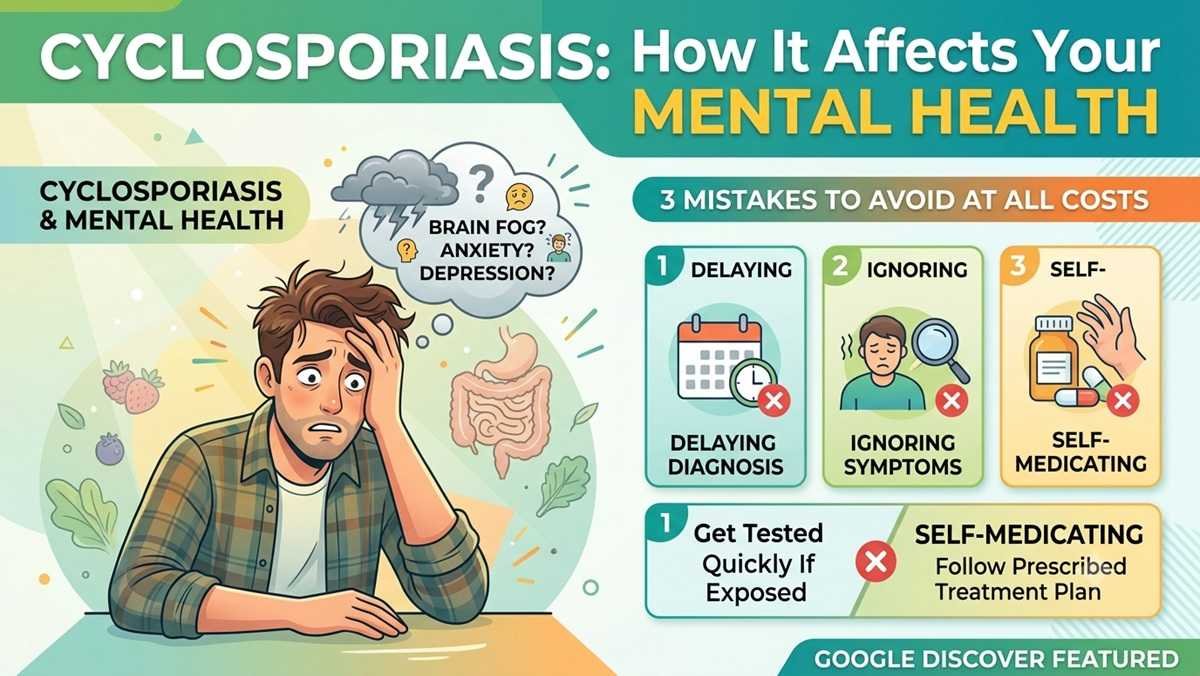
Mistake #1: Assuming Every Stomach Problem Is Cyclosporiasis
During an outbreak, it is easy to assume that every digestive symptom means you have the infection.
But diarrhea can happen for many reasons, including:
- Food poisoning
- Viral stomach infections
- Stress
- Food intolerance
- Irritable bowel syndrome
Stress itself can also upset the digestive system.
When we are anxious, the brain and gut communicate closely through the gut-brain axis. That can lead to stomach pain, nausea, bloating, or changes in bowel habits—even when no infection is present.
Instead of guessing, pay attention to symptoms that persist and speak with your healthcare provider if needed.
Mistake #2: Spending Hours Reading Frightening Posts Online
The internet is full of worst-case scenarios.
Reading outbreak news over and over may increase anxiety without giving you anything useful in return.
Psychologists call this doomscrolling, and it can:
- Increase stress hormones
- Make symptoms feel worse
- Disrupt sleep
- Raise health anxiety
A better approach is to:
- Check trusted public health updates once or twice a day.
- Avoid rumors and unverified posts on social media.
- Focus on practical prevention instead of fear.
Information helps. Constant exposure to frightening content usually does not.
Mistake #3: Ignoring Food Safety Because “It Won’t Happen to Me”
Many outbreaks are linked to contaminated produce.
The good news is that simple habits can lower your risk.
These include:
- Washing hands before preparing food
- Rinsing fruits and vegetables under running water
- Cutting away bruised or damaged areas
- Using clean cutting boards and utensils
- Storing fresh produce properly
- Drinking safe, clean water
Good food hygiene protects you not only from Cyclospora but also from many other foodborne illnesses.
Does Cyclospora go away on its own?
Some people do recover without medication.
However, symptoms often last much longer without treatment.
The illness can continue for:
- Several weeks
- More than a month
- Sometimes with symptoms returning after a brief improvement
Because ongoing diarrhea can lead to dehydration and weight loss, it is better to get medical advice than to simply wait it out.
Cyclosporiasis treatment
The good news is that effective treatment is available.
Doctors usually confirm the diagnosis with stool testing before prescribing medication.
Treatment focuses on:
- Eliminating the parasite
- Preventing dehydration
- Restoring nutrition
- Managing symptoms
Drinking plenty of fluids is especially important because prolonged diarrhea can quickly lead to dehydration.
People with weakened immune systems may need closer monitoring.
What antibiotic kills Cyclospora?
The standard antibiotic used to treat Cyclospora infection is trimethoprim-sulfamethoxazole (TMP-SMX), which is commonly sold under brand names such as Bactrim or Septra.
A healthcare provider will decide the right dose based on age, medical history, and overall health.
People who are allergic to sulfa medications should talk with their provider about other options, since treatment needs to be individualized.
You should never take antibiotics without medical guidance, because unnecessary use can cause side effects and contribute to antibiotic resistance.
Cyclospora cayetanensis treatment
Treatment for Cyclospora cayetanensis usually includes:
- Prescription antibiotics
- Plenty of fluids
- Electrolyte replacement
- Easy-to-digest foods during recovery
- Adequate rest
Most people begin to feel better after proper treatment, although fatigue may linger for a short time.
Getting treated promptly also helps reduce complications from prolonged diarrhea.
How Anxiety Can Make Recovery Feel Worse
Whether you are actually infected or simply worried about becoming sick, stress can make recovery feel harder.
High anxiety may lead to:
- Poor sleep
- Reduced appetite
- More stomach discomfort
- Muscle tension
- Fatigue
- Trouble concentrating
The mind and body are closely connected.
Taking care of your emotional health supports your physical recovery too.
Simple habits like deep breathing, light walking if you feel up to it, limiting exposure to alarming news, and staying connected with supportive friends or family can help reduce unnecessary stress.
When Should You See a Healthcare Provider?
You should seek medical care if you experience:
- Persistent watery diarrhea
- Severe dehydration
- High fever
- Bloody stools
- Symptoms lasting more than a few days
- Significant weight loss
- Ongoing fatigue after digestive symptoms begin
Early diagnosis allows healthcare providers to order the right stool tests and recommend effective treatment.
Practical Tips to Protect Both Your Body and Mind
Outbreaks can sound frightening, but practical steps are far more helpful than worrying about every possible scenario.
Here are a few habits that can make a real difference:
- Wash fresh fruits and vegetables thoroughly under running water.
- Wash your hands with soap and water before eating and preparing food.
- Drink water from safe sources.
- Stay informed through trusted public health updates.
- Avoid sharing unverified social media posts.
- Contact your healthcare provider if symptoms develop instead of relying on internet searches.
- Keep up with sleep, hydration, and nutrition to support your immune system.
Small daily habits often offer the strongest protection.
Final Thoughts
The recent Cyclosporiasis outbreak in Michigan is a reminder that foodborne illness can appear suddenly, but it is also a reminder of how quickly fear can spread alongside the infection itself.
Understanding what cyclosporiasis is, recognizing the symptoms, knowing how it is transmitted, and learning about available treatment can replace uncertainty with confidence.
The biggest lesson may be this: do not let anxiety become a second illness.
Avoid assuming every stomach ache is Cyclospora, resist the urge to doomscroll through frightening headlines, and do not overlook basic food safety habits.
Staying informed without becoming overwhelmed is one of the healthiest things you can do for both your body and your mind. While the outbreak deserves attention, it does not have to take over your peace of mind. With accurate information, sensible precautions, and timely medical care when needed, most people can handle situations like this calmly and safely.
Read Also:
https://thebrainalert.com/neurologist-3-mental-workouts-keep-brain-young/