

What if the person who gets the promotion, keeps the relationship, calms the room, and earns trust in a crisis is not the smartest person in the room—but the one who understands emotions best?
That question surprises a lot of people, because most of us grow up hearing that the smartest people are the ones most likely to succeed. Good grades, high test scores, and a strong IQ are usually treated like the main signs of future success. But if you’ve ever seen a brilliant person struggle to communicate, handle pressure, or maintain healthy relationships, you already know that intelligence alone doesn’t tell the whole story.
That’s where emotional intelligence, often called EQ (Emotional Quotient), comes in.
In everyday life, your ability to understand emotions—your own and other people’s—can have a huge effect on your happiness, career, relationships, and mental health. In many situations, it matters just as much as, if not more than, IQ.
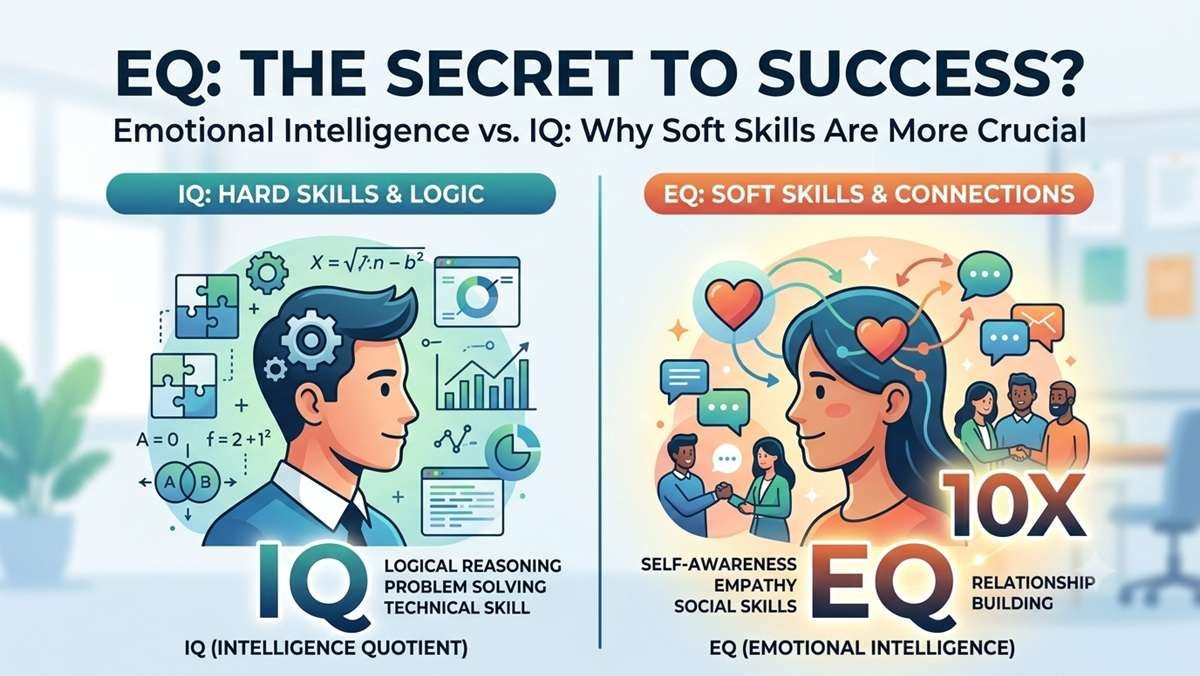
Some people even say EQ is “ten times more important” than IQ. That’s more of a popular expression than a scientific fact, but the point still stands: emotional intelligence plays a major role in almost every part of life.
Let’s take a closer look at what emotional intelligence is, why it matters so much, and how you can build it.
Key Takeaways
- Emotional intelligence is the ability to recognize, understand, and manage emotions effectively.
- EQ affects relationships, communication, leadership, stress management, and mental well-being.
- The five main parts of EQ are self-awareness, self-regulation, motivation, empathy, and social skills.
- Emotional intelligence can be learned and improved at any age.
- In real life, EQ often matters just as much as IQ—and sometimes more.
What Does Emotional Intelligence Mean?
Emotional intelligence (EQ) is the ability to notice, understand, manage, and use emotions in a healthy way.
It does not mean ignoring your feelings or pretending everything is fine. It means being aware of what you feel, understanding why you feel that way, and responding thoughtfully instead of reacting on impulse.
Psychologists usually describe emotional intelligence as a mix of several abilities:
- Recognizing your own emotions
- Understanding what triggers those emotions
- Managing emotional reactions
- Reading emotions in other people
- Building healthy relationships through empathy and communication
In simple terms, emotional intelligence helps you stay in control of your emotions instead of letting your emotions control you.
The Roots of Emotional Intelligence
People have talked about emotions for centuries, but the modern idea of emotional intelligence was introduced in 1990 by psychologists Peter Salovey and John D. Mayer.
Later, psychologist and science journalist Daniel Goleman helped bring the idea into the mainstream with his bestselling book Emotional Intelligence. His work made EQ a familiar topic in schools, workplaces, leadership training, and everyday conversations.
Today, emotional intelligence is widely seen as an important life skill, even though researchers still debate the best way to measure it. IQ can be tested with standardized exams, but EQ is harder to reduce to a single score.
Still, many studies suggest that emotionally intelligent people often enjoy:
- Better relationships
- Stronger leadership skills
- Higher job satisfaction
- Better stress management
- Improved mental health
Why EQ Often Matters More Than IQ
IQ measures how well you solve problems, learn new information, and think logically.
EQ measures how well you handle emotions, communicate with others, and deal with life’s challenges.
Think about two employees.
One has a very high IQ but gets defensive whenever someone gives feedback. They lose their temper in stressful meetings and have trouble working with others.
The other may not be a genius, but they stay calm under pressure, handle disagreements respectfully, motivate the people around them, and adapt when things change.
Who is more likely to become a trusted leader?
In many situations, it’s the second person.
Knowledge can open doors.
Emotional intelligence helps you keep them open.
What Are the 5 Characteristics of Emotional Intelligence?
Daniel Goleman identified five core parts of emotional intelligence.
1. Self-Awareness
Self-awareness means understanding your emotions as they happen.
Emotionally intelligent people don’t ignore their feelings. They notice them and ask questions like:
- Why am I feeling anxious?
- Why did that comment bother me so much?
- What do I actually need right now?
When you can identify what you’re feeling, you’re in a much better position to manage it.
People with strong self-awareness also tend to have realistic confidence because they understand both their strengths and their weaknesses.
2. Self-Regulation
Feeling angry is not the problem.
Reacting without thinking often is.
Self-regulation is the ability to pause before responding.
People with high EQ do get frustrated, upset, or disappointed. The difference is that they usually choose healthier ways to express those emotions.
Instead of snapping during an argument, they take a breath.
Instead of firing off an angry email, they wait until they’ve calmed down.
That kind of control protects relationships and prevents a lot of unnecessary conflict.
3. Motivation
Emotionally intelligent people are often driven by personal values rather than just outside rewards.
They bounce back from setbacks because they focus on long-term goals instead of temporary failures.
Instead of thinking,
“I failed.”
they’re more likely to think,
“What can I learn from this?”
That mindset helps them keep moving forward even when things get difficult.
4. Empathy
Empathy is one of the most powerful emotional skills a person can have.
It means understanding how someone else feels without rushing to judge them or fix the problem right away.
An empathetic person pays attention to emotional clues such as:
- Facial expressions
- Tone of voice
- Body language
- Silence
They listen to understand, not just to reply.
Empathy strengthens friendships, marriages, parenting, leadership, and teamwork.
5. Social Skills
Good communication is about more than speaking clearly.
It also includes:
- Listening actively
- Handling disagreements respectfully
- Building trust
- Working well with others
- Encouraging cooperation
People with strong emotional intelligence usually make others feel heard, respected, and comfortable.
How Self-Aware Is an Emotionally Intelligent Person?
People with high emotional intelligence are usually very aware of what they’re feeling.
They don’t just notice obvious emotions like happiness or anger. They can also identify more subtle ones, such as:
- Disappointment
- Jealousy
- Shame
- Frustration
- Nervous excitement
- Loneliness
Being able to name an emotion often makes it easier to handle.
For example, saying,
“I’m feeling disappointed,”
is much more useful than just feeling bad and not knowing why.
Self-awareness also keeps emotions from quietly steering your decisions in the background.
Do Emotionally Intelligent People Have Better Self-Control?
Yes, usually they do.
One of the biggest strengths of emotionally intelligent people is emotional regulation.
That doesn’t mean they never get upset. It means they don’t let emotions completely take over.
Instead of reacting right away, they often:
- Pause
- Reflect
- Think about the consequences
- Choose a more thoughtful response
That skill is especially helpful during stressful work situations, family arguments, or unexpected life problems.
Are Emotionally Intelligent People Better at Understanding Others?
Absolutely.
People with high EQ tend to notice emotional signals that others miss.
They can tell when someone says “I’m fine” but clearly isn’t.
They notice when a coworker seems overwhelmed.
They understand that people don’t always say exactly what they feel.
Because of that, emotionally intelligent people often build stronger personal and professional relationships.
Are Emotionally Intelligent People More Empathetic?
In most cases, yes.
Empathy is a major part of emotional intelligence.
And empathy doesn’t mean you have to agree with someone. It simply means trying to understand what they’re feeling.
For example, if a friend loses their job, an empathetic response might sound like this:
“That sounds incredibly stressful. I’m here if you want to talk.”
Instead of jumping straight into advice, emotionally intelligent people usually try to make the other person feel understood first.
That kind of emotional connection builds trust.
What Are 7 Signs of Low Emotional Intelligence?
Recognizing low emotional intelligence isn’t about judging people. It’s about noticing habits that can be improved.
Some common signs include:
1. Blaming Others for Everything
People with low EQ often avoid taking responsibility for their part in a problem.
2. Struggling to Accept Feedback
Even gentle suggestions may feel like personal criticism.
3. Frequent Emotional Outbursts
They react before thinking and often regret what they said later.
4. Poor Listening Skills
Instead of really hearing others, they interrupt or dominate the conversation.
5. Lack of Empathy
They have trouble understanding or caring about how other people feel.
6. Holding Grudges
Rather than working through emotions, they stay angry for a long time.
7. Constant Conflict in Relationships
Misunderstandings keep happening because emotions aren’t being handled well.
The good news is that emotional intelligence is not fixed.
Every one of these habits can improve with practice.
How to Master Your Emotions
A lot of people ask, How do you master your emotions?
The answer is not about controlling every feeling you have.
It’s about learning how to respond in healthier ways.
Here are some practical strategies.
Pause Before Reacting
Give yourself a few seconds before answering in emotionally charged situations.
Those few seconds can save you from saying something you’ll regret later.
Name Your Emotion
Research suggests that simply identifying what you feel can reduce its intensity.
Instead of saying,
“I’m stressed,”
try being more specific.
“I’m anxious because I’m worried about tomorrow’s meeting.”
That kind of clarity often brings a sense of calm.
Practice Mindfulness
Mindfulness helps you notice emotions without immediately reacting to them.
Even five minutes of slow breathing each day can improve emotional awareness.
Challenge Negative Thoughts
Ask yourself:
- Is this thought actually true?
- Am I assuming the worst?
- What evidence do I have?
A lot of the time, emotions get stronger because of the story we tell ourselves, not because of the situation itself.
Build Healthy Coping Habits
Exercise, journaling, good sleep, and talking with people you trust all support emotional regulation.
Healthy habits make it easier to stay steady when life gets stressful.
Can Emotional Intelligence Be Learned?
Yes.
Unlike IQ, emotional intelligence can grow throughout your life.
You can strengthen it by:
- Practicing active listening
- Reflecting on your emotional reactions
- Asking for honest feedback
- Reading about emotional awareness
- Learning conflict-resolution skills
- Becoming more curious about other people’s perspectives
Small changes, repeated consistently, can lead to real growth over time.
Are Emotionally Intelligent People Better at Work?
Many employers now value emotional intelligence just as much as technical skill.
People with strong EQ often:
- Work well in teams
- Handle stress better
- Resolve conflicts professionally
- Communicate clearly
- Adapt to change
- Build trust with coworkers
Some research has found positive links between emotional intelligence and leadership, teamwork, and job satisfaction.
That said, scientists also point out that the findings are not always simple, partly because EQ is hard to measure consistently. So while emotional intelligence is clearly valuable, it is not a magic formula for workplace success.
Emotional Intelligence and Mental Health
Your emotional intelligence does not decide whether you’ll ever feel anxious, depressed, or overwhelmed.
But it can shape how you respond when difficult emotions show up.
People with stronger emotional awareness often:
- Notice stress earlier
- Ask for help when they need it
- Avoid unhealthy coping habits
- Recover from setbacks more effectively
- Maintain healthier relationships
That’s why emotional intelligence is closely tied to emotional resilience.
Simple Daily Habits to Build Emotional Intelligence
Improving EQ doesn’t require a huge life overhaul.
You can start with small daily habits:
- Check in with your emotions each morning.
- Listen without interrupting.
- Pause before responding during disagreements.
- Keep a journal about difficult emotions.
- Ask trusted friends how you come across under stress.
- Practice gratitude regularly.
- Try to see situations from another person’s point of view.
Over time, these habits start to feel natural.
Final Thoughts
When people hear the word “intelligence,” they usually think about solving math problems, remembering facts, or doing well on exams.
But life asks for much more than academic knowledge.
Every day, we deal with disappointment, relationships, criticism, conflict, stress, and tough decisions. We comfort people we care about, recover from setbacks, and try to keep moving forward. Those moments depend less on IQ and much more on emotional intelligence.
IQ can help you learn new things.
EQ helps you use what you know wisely.
It shapes the way you communicate, lead, solve problems, and care for yourself and others.
The best part is that emotional intelligence is not something you’re simply born with and stuck with forever. It grows through self-awareness, empathy, practice, and reflection. Every time you pause before reacting, listen with real curiosity, or choose understanding over judgment, you’re strengthening your EQ.
In the end, success is not just about how much you know. It’s also about how well you understand yourself and connect with the people around you. And that is a skill worth building for life.
Read Also:
https://thebrainalert.com/how-to-stop-overthinking-in-10-seconds/